Sifat dan Keunggulan Beton Bertulang Serat Baja (SFRC)
Key Properties of Steel Fiber Concrete
1.1 Mechanical Strength
Serat Baja Reinforced Concrete (SFRC) is a high-performance construction material widely used in modern infrastructure projects.
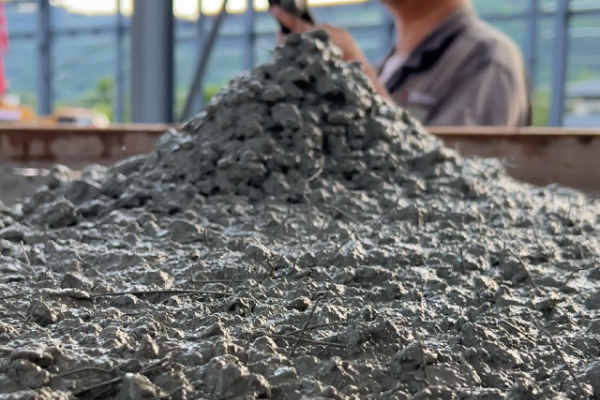
Based on global research and engineering data, adding steel fibers does not significantly increase the compressive strength of concrete. On average, the improvement is around 10%.
However, the compressive toughness is greatly enhanced. This is because steel fibers improve the deformation capacity of concrete under load, allowing it to absorb more energy before failure and making the material less brittle.
1.2 Toughness and Crack Resistance
Toughness refers to the ability of a material to absorb energy before failure, while crack resistance describes the ability to control crack formation and propagation.
When steel fibers are added to concrete:
- Plastic shrinkage and creep are reduced
- Internal stress is redistributed through fiber bonding
- Crack initiation is delayed
- Crack propagation is effectively controlled
As the load increases beyond the capacity of plain concrete, stress is transferred from the matrix to the steel fibers through bonding forces. The fibers act as a reinforcement network, restricting crack growth and significantly improving overall durability.
1.3 Impact Resistance
Under dynamic or impact loads, steel fiber concrete performs significantly better than conventional concrete.
When cracks develop:
- Steel fibers either pull out (overcoming bond strength), or
- Reach their yield strength and fracture
Both processes consume a large amount of energy, which gives SFRC its excellent impact resistance and energy absorption capacity.
1.4 Wear Resistance and Durability
The addition of steel fibers greatly improves the wear resistance of concrete.
Experimental results show that:
- Wear loss is reduced by approximately 30% compared to ordinary concrete
- Resistance to corrosion, freeze-thaw cycles, and abrasion is significantly enhanced
This makes steel fiber concrete ideal for heavy-duty and high-traffic applications.
Applications of Steel Fiber Concrete in Roads and Bridges
Due to its superior performance—such as crack resistance, flexural strength, impact resistance, and fatigue durability—steel fiber reinforced concrete is widely used in road and bridge engineering.
Key Benefits in Infrastructure Applications:
- Reduces maintenance and repair costs
- Extends service life
- Allows thinner pavement layers
- Lowers overall construction costs
In traditional road systems, pavement damage often requires complete removal and reconstruction. In contrast, applying a steel fiber concrete overlay on existing concrete surfaces is a more economical and efficient solution.
Design and Thickness Advantage
According to standard concrete pavement design guidelines:
- SFRC pavement thickness can be reduced to 50%–60% of conventional concrete slabs
- Mechanical properties of traditional concrete can be replaced with SFRC parameters for design optimization
Types of Steel Fibers Used in Concrete
In steel fiber reinforced concrete (SFRC), selecting the right type of steel fiber is essential to achieve optimal performance. The most commonly used types include hooked-end steel fibers, straight steel fibers, and crimped steel fibers, each designed for different structural and performance requirements.
Among these, hooked-end steel fibers are the most widely used in construction projects due to their superior anchorage and bonding strength within the concrete matrix. This type of fiber provides excellent crack control, improves load transfer efficiency, and enhances the overall toughness of the concrete structure.
The performance of steel fiber concrete is also influenced by several key parameters, including fiber length, diameter, aspect ratio, and tensile strength. A higher aspect ratio generally improves reinforcement performance, while proper tensile strength ensures the fibers can effectively resist external loads and stresses.
In practical applications such as industrial floors, road pavements, bridge decks, and precast concrete elements, choosing the appropriate steel fiber specification can significantly improve durability, reduce maintenance costs, and extend service life.
For best results, it is recommended to work with a reliable steel fiber manufacturer or supplier who can provide customized solutions based on specific project requirements. High-quality steel fibers not only enhance concrete performance but also contribute to more cost-effective and sustainable construction.
Conclusion
Steel fiber reinforced concrete (SFRC) offers a balanced combination of strength, toughness, durability, and cost efficiency, making it an ideal solution for modern infrastructure projects, especially in roads, bridges, industrial floors, and heavy-load environments.
Tentang Penulis: Zhongdimei - Produsen Bahan Konstruksi dan Lantai Profesional Sejak 2015
Kami berbagi informasi terbaru perusahaan, wawasan industri, dan pengetahuan teknis yang didasarkan pada pengalaman manufaktur nyata dan aplikasi konstruksi praktis. Konten kami mencerminkan komitmen Zhongdimei terhadap kualitas, inovasi, dan solusi material yang andal untuk proyek konstruksi dan lantai global.
Bagikan