Effect of Number of End Hooks of Steel Fibers on Performance of Steel Fiber Reinforced Concrete
Abstract
The effect of the number of steel fiber end hooks on the performance of steel fiber reinforced concrete (SFRC) and its mechanism were studied through single wire pull-out test, compressive strength test, and notched beam bending-tensile performance test. The results show that as the number of end hooks on the steel fiber increases, the ultimate bond strength between the steel fiber and the concrete matrix also increases. The number of end hooks has little effect on the compressive performance of SFRC, although steel fibers with a single end hook can slightly enhance the compressive strength. With more end hooks, the descending branch of the SFRC flexural-tensile curve becomes less steep, the curve becomes fuller, and the specimens can sustain higher flexural-tensile stresses. As cracks continue to propagate, steel fibers with two or three end hooks enable SFRC specimens to maintain relatively high residual flexuraltensile strength even after fracture and large deformation occur.Steel fiber reinforced concrete (SFRC) is widely used to improve crack resistance and durability. According to American Concrete Institute (ACI), steel fibers significantly enhance the tensile performance of concrete.
Introduction
Conventional concrete has very low tensile strength and poor toughness. As a result, cracks can easily develop during the plastic stage, hardening process, and drying stage. Even under relatively small flexural loads, concrete structures are prone to cracking during service, and these cracks may propagate rapidly, leading to sudden brittle failure.To address this issue, steel fiber reinforced concrete (SFRC) has been widely adopted. By adding steel fibers for concrete reinforcement, the tensile strength, crack resistance, and overall durability of concrete can be significantly improved. Due to its excellent performance, SFRC is now commonly used in engineering applications that require high crack resistance and structural reliability.
Types of Steel Fibers
Based on shape, steel fibers used in concrete can be classified into:
- Straight steel fibers
- Hooked end steel fibers
- Crimped (wave-shaped) fibers
- Indented fibers
- Milled or irregular fibers
Among these, hooked end steel fiber is considered one of the most effective types for concrete reinforcement.
Why Hooked End Steel Fiber Performs Better
Early applications mainly used straight steel fibers. However, practical results showed that their ability to improve crack resistance and strength was limited.
Compared with straight fibers, hooked end steel fibers provide:
- Stronger anchorage with the concrete matrix
- Higher bond strength
- Better stress transfer capability
- Improved tensile performance
By optimizing the geometry of the hooked ends, the bonding performance between steel fibers and concrete can be significantly enhanced, allowing the material to better resist crack propagation.
Factors Affecting Bond Strength
Research shows that the bonding performance of hooked steel fibers is closely related to several structural parameters, including:
- Fiber diameter
- Hook angle
- Material tensile strength
These factors influence the pull-out behavior and failure mode of steel fibers in concrete.
To better understand the anchorage mechanism, models such as the equivalent pulley model have been proposed. In this model:
- The curved hook section provides rotational friction
- The straight part provides sliding friction
This helps predict how fibers resist pull-out under load.
Research Gap: Hook Number
While many studies focus on fiber shape and size, the effect of hook number on performance has not been fully explored. In reality, the number of hooks may significantly influence:
- Anchorage capacity
- Bond strength
- Crack resistance
- Pull-out behavior
Purpose of This Study
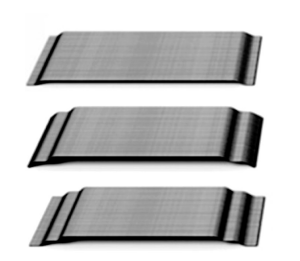
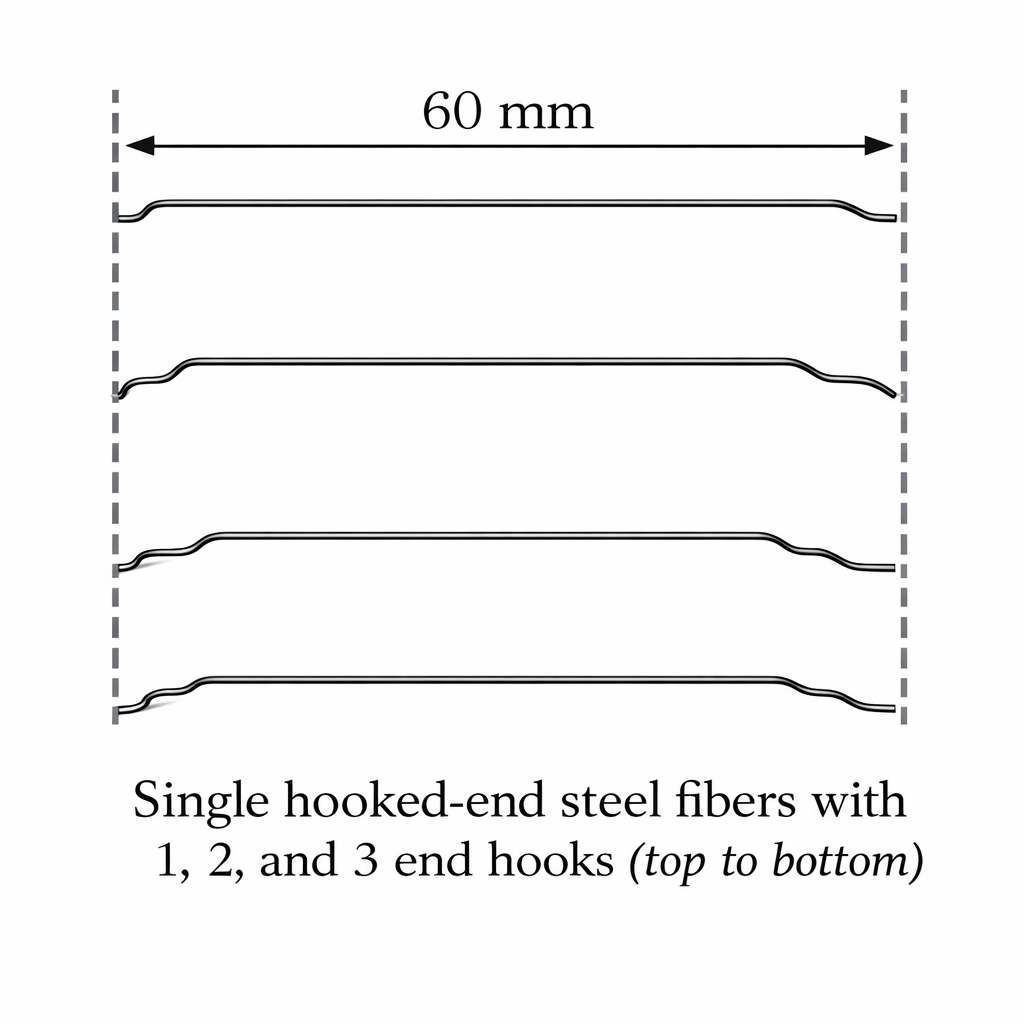
To investigate this, steel fibers with identical length and diameter but different hook numbers (1 hook, 2 hooks, and 3 hooks) were tested.This study focuses on:
- The effect of hook number on steel fiber reinforced concrete (SFRC) strength and toughness
- The pull-out behavior of hooked steel fibers
- The underlying mechanism of fiber anchorage
The findings provide practical guidance for the design and application of hooked end steel fiber in steel fiber reinforced concrete (SFRC).
Experimental Program
Materials
The concrete used in this study was prepared with ordinary Portland cement (Grade 42.5), meeting standard requirements.
Hooked end steel fibers were used as reinforcement, with:
- Length: 60 mm
- Diameter: 0.9 mm
- Hook numbers: 1 hook, 2 hooks, and 3 hooks
Fine aggregate: natural river sand (fineness modulus 2.7)
Coarse aggregate: crushed stone (5–16 mm)
Water reducer: polycarboxylate superplasticizer (≥25% reduction)
Water: standard tap water for concrete mixing
Mix Design
Two strength grades of steel fiber reinforced concrete (SFRC) were prepared:
- C30
- C50
Steel fiber dosage:
👉 40 kg/m³ (widely used in practical engineering)
Testing Methods
lexural Strength and Residual Strength
Flexural performance is one of the most important indicators for evaluating steel fiber for steel fiber reinforced concrete (SFRC), especially its crack resistance and toughness.
fL=2BHsp23FLL
fCMOD=2BHsp23FCMODL
Where:
- fL: ultimate flexural strength
- fCMOD: residual flexural strength
- FL: maximum load
- FCMOD: load at crack opening
- L: span length
- B: specimen width
- Hsp: effective height
👉 These indicators reflect the post-crack load-bearing capacity, which is critical for SFRC performance.
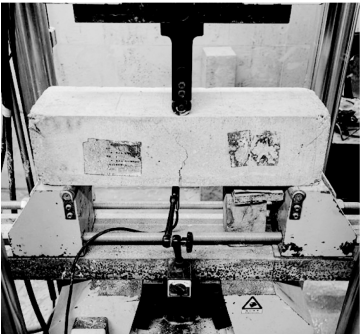
residual flexural-tensile strength
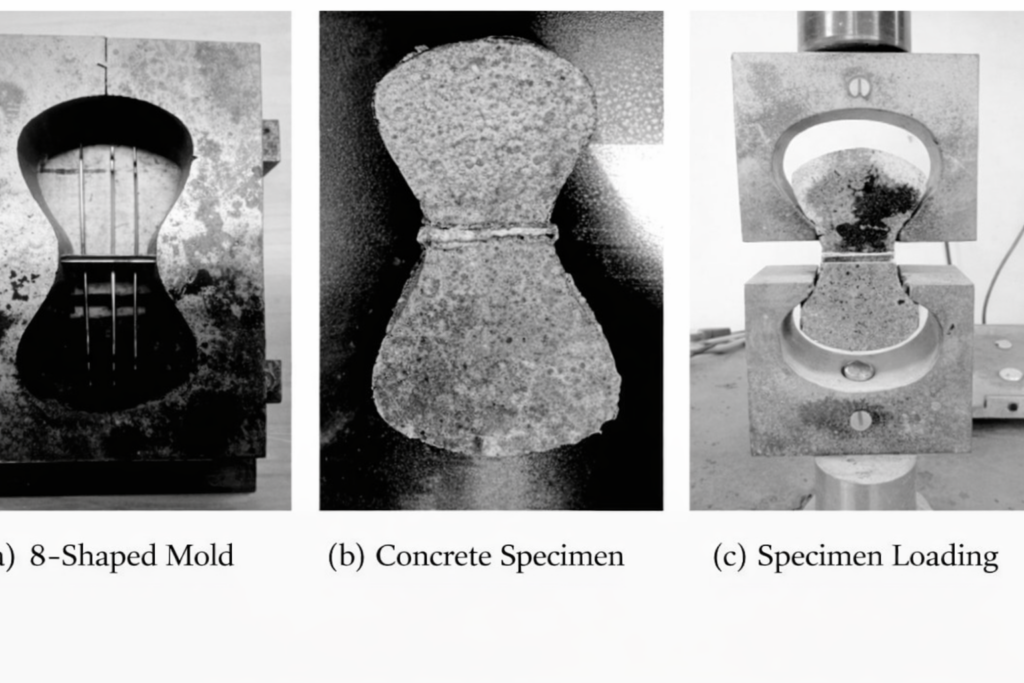
steel fiber and cement mortar
Results and Discussion
Effect of Hook Number on Bond Strength
- Increasing hook number significantly improves bond strength
- Pull-out resistance ranking:
3 hooks > 2 hooks > 1 hook
- Maximum anchorage is reached at similar displacement (2–3 mm), but:
- Higher hook number = higher load capacity
Key insight:
More hooks create stronger mechanical anchorage, not just friction.
Effect on Compressive Strength
- For C30 concrete:
- Minimal impact from steel fibers
- For C50 concrete:
- Compressive strength increases:
- 1 hook: +13.4%
- 2 hooks: +10.8%
- 3 hooks: +9.7%
- Compressive strength increases:
Important takeaway:
- More hooks ≠ always better
- Too many hooks may reduce fiber dispersion
Effect on Flexural Performance (Most Important)
- After cracking:
- Concrete stops carrying load
- Steel fibers take over
- With more hooks:
- Higher flexural stress
- Better crack bridging
- Slower strength reduction
Performance ranking again:
3 hooks > 2 hooks > 1 hook
Crack Behavior Mechanism
- At early loading:
- Concrete carries load
- After cracking:
- Load transfers to steel fibers
- Hooks anchor fibers across cracks
- Key difference:
- 1 hook fiber → easily pulled out or straightened
- 2–3 hook fibers → remain anchored longer
👉 Result:
Better durability and structural safety
Practical Conclusion
- More hooks improve:
- Bond strength
- Crack resistance
- Flexural performance
- However:
- Too many hooks may reduce workability and increase cost
👉 Best choice in most projects: 2-hook steel fiber
👉 High-performance projects: 3-hook steel fiber
Hooked end steel fiber is widely used in concrete reinforcement. Learn more about our hooked steel fiber products.

Giới thiệu về tác giả: Zhongdimei — Nhà sản xuất chuyên nghiệp về vật liệu xây dựng và sàn từ năm 2015
Chúng tôi chia sẻ các cập nhật về công ty, thông tin ngành và kiến thức kỹ thuật dựa trên kinh nghiệm sản xuất thực tế và ứng dụng thực tiễn trong xây dựng. Nội dung của chúng tôi thể hiện cam kết của Zhongdimei đối với chất lượng, sự đổi mới và các giải pháp vật liệu đáng tin cậy cho các dự án xây dựng và sàn toàn cầu.
Chia sẻ