What is the Standard Steel Fiber Dosage? 3 Major Application Guidelines
The standard steel fiber dosage typically ranges from 20 kg to 100 kg per cubic meter of concrete, or 0.3% to 1.5% by volume. The exact amount depends heavily on the project type, fiber geometry, and required mechanical properties.
“According to the [ACI 544.1R-96 Report] on Fiber Reinforced Concrete, adding steel fibers significantly improves the toughness and impact resistance of concrete slabs.”
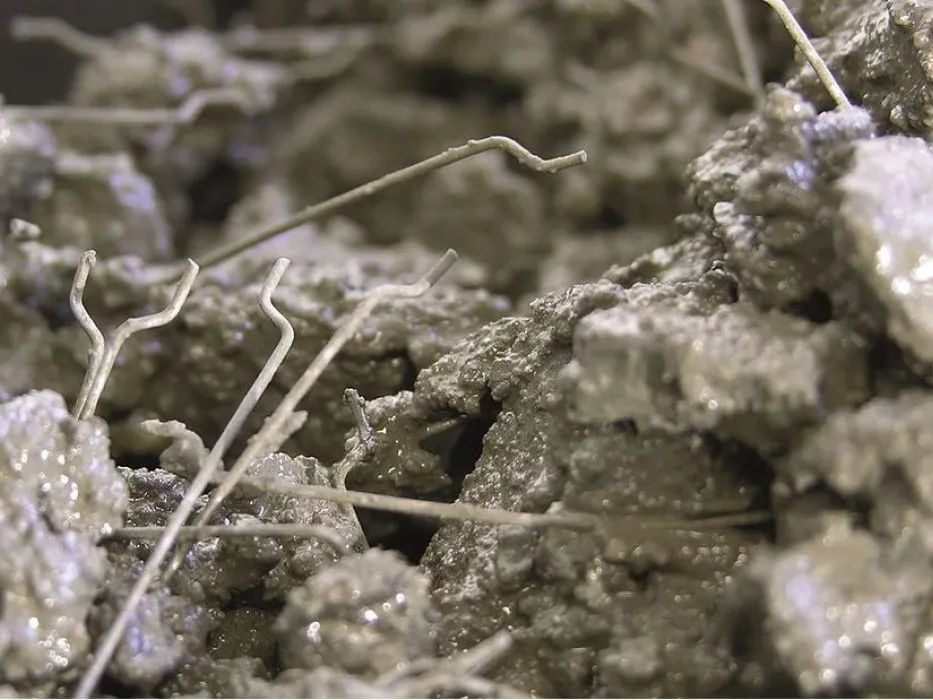
Recommended Dosage by Application
To ensure the best balance between performance and workability, we categorize steel fiber dosage into three levels:
High-Performance Projects (Bridges & Heavy-Duty)
- Dosage: 50–100 kg/m³
- Why: These structures require superior fatigue and impact resistance to handle constant heavy loads.
Standard Infrastructure (Roads & Pavement)
- Dosage: 30–80 kg/m³
- Why: Used to control shrinkage cracks and improve the service life of highways and urban roads.
General Industrial Use (Floors & Slabs)
- Dosage: 20–40 kg/m³
- Why: Primarily used to replace traditional rebar mesh for crack control in industrial warehouses and residential basements.
Quick Reference: Steel Fiber Dosage Table
| Application Type | Dosage (kg/m³) | Volume (%) | Performance Goal |
| Bridges & Tunnels | 50 – 100 | 0.6% – 1.25% | Crack & Fatigue Control |
| Industrial Floors | 20 – 45 | 0.25% – 0.6% | Impact Resistance |
| Shotcrete/Precast | 30 – 60 | 0.4% – 0.8% | Flexural Strength |
Expert FAQ: Getting the Dosage Right
Q1: What happens if the steel fiber dosage is too low?
If the dosage is below 20 kg/m³, the reinforcement effect may be insufficient to control significant cracking, especially in high-stress environments like logistics centers.
Q2: Does fiber type affect the dosage?
Yes. High-tensile, hooked-end steel fibers often allow for a slightly lower dosage compared to straight fibers while achieving the same structural performance.
Q3: How do I ensure even distribution at high dosages?
For dosages above 60 kg/m³, it is recommended to add fibers gradually into the mixer and increase the mixing time by 30-60 seconds to prevent “balling.”
“Get a precise quote based on your dosage needs [here].”

About the Author: Zhongdimei — Professional Construction and Flooring Materials Manufacturer Since 2015
We share company updates, industry insights, and technical knowledge grounded in real manufacturing experience and practical construction applications. Our content reflects Zhongdimei’s commitment to quality, innovation, and reliable material solutions for global construction and flooring projects.
Share